Affirm Health - Daily Huddle Tool: Redesign of Pre-Visit Planning Tool for Physicians
Affirm Health - Daily Huddle Tool: Redesign of Pre-Visit Planning Tool for Physicians
Affirm Health - Daily Huddle Tool: Redesign of Pre-Visit Planning Tool for Physicians
Tools Used
Tools Used
Figma
Figma
My Role
My Role
Product Designer & Researcher
Product Designer & Researcher
Length
Length
3 Months
3 Months
Background
Redesign the Daily Huddle Tool, a SaSS web application that is currently being used by hundreds of primary care clinics in 10 U.S. states to help increase efficiency and profitability.
Background
Redesign the Daily Huddle Tool, a SaSS web application that is currently being used by hundreds of primary care clinics in 10 U.S. states to help increase efficiency and profitability.
Business Goals
Increase efficiency and user friendliness of using the tool.
Increase number of doctors, nurses, and medical assistants that use the Daily Huddle Tool on their computers rather than print it off— so that customers can ultimately gain more value and efficiency from the tool.
Increase customer value of product = increase cost of product
Business Goals
Increase efficiency and user friendliness of using the tool.
Increase number of doctors, nurses, and medical assistants that use the Daily Huddle Tool on their computers rather than print it off— so that customers can ultimately gain more value and efficiency from the tool.
Increase customer value of product = increase cost of product
Challenges
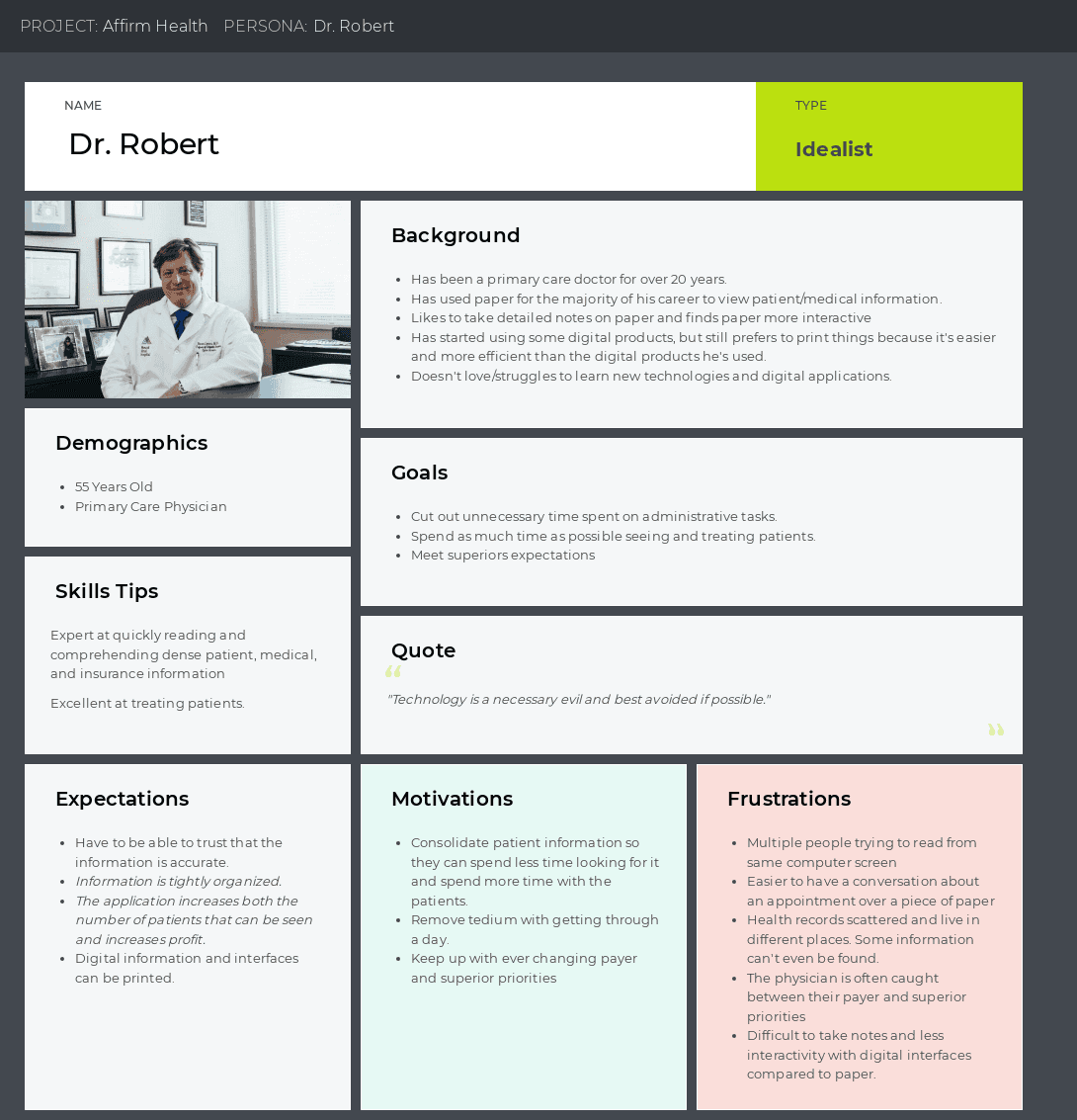
Most doctors prefer that information be densely/tightly displayed, which goes against common design practice.
Most doctors do not like change and see technology as a necessary evil.
The size of the design needs to fit within standard print size.
The Healthcare system in the U.S. is extremely complex.
There are many backend technical challenges and barriers that currently limit what can be done.
Challenges
Most doctors prefer that information be densely/tightly displayed, which goes against common design practice.
Most doctors do not like change and see technology as a necessary evil.
The size of the design needs to fit within standard print size.
The Healthcare system in the U.S. is extremely complex.
There are many backend technical challenges and barriers that currently limit what can be done.
Challenges
Most doctors prefer that information be densely/tightly displayed, which goes against common design practice.
Most doctors do not like change and see technology as a necessary evil.
The size of the design needs to fit within standard print size.
The Healthcare system in the U.S. is extremely complex.
There are many backend technical challenges and barriers that currently limit what can be done.
18.5%
Increase in Adoption of digital tool, instead of printing schedule off.
Increase in Adoption of digital tool, instead of printing schedule off.
Problem
Problem
Many doctors prefer information to be displayed tightly.
The majority of doctors and nurses still prefer to use paper over computer screens.
This limits the potential of what clinics can gain by using a computer.
Many doctors prefer information to be displayed tightly.
The majority of doctors and nurses still prefer to use paper over computer screens.
This limits the potential of what clinics can gain by using a computer.
The Solution
The Solution
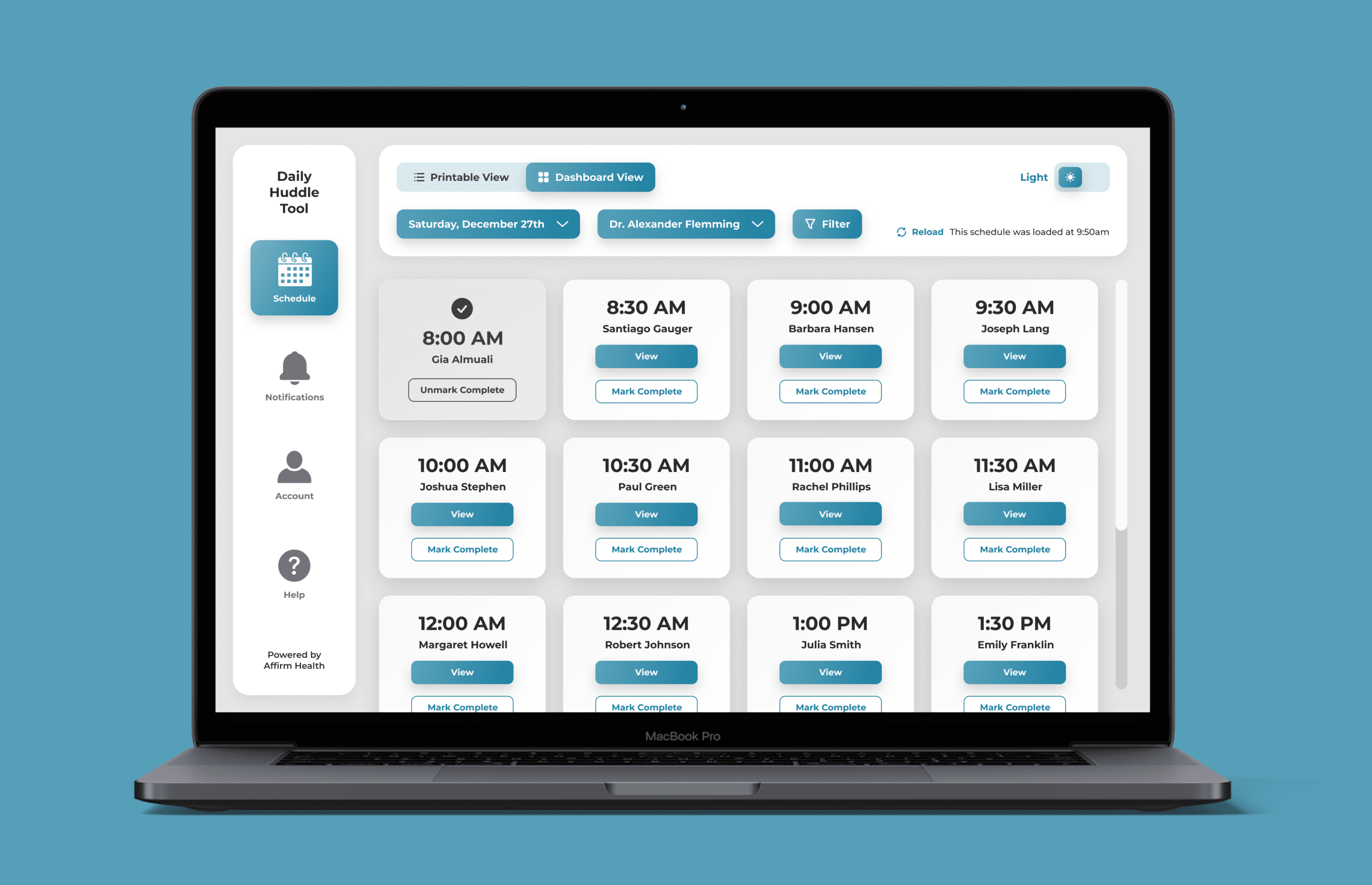
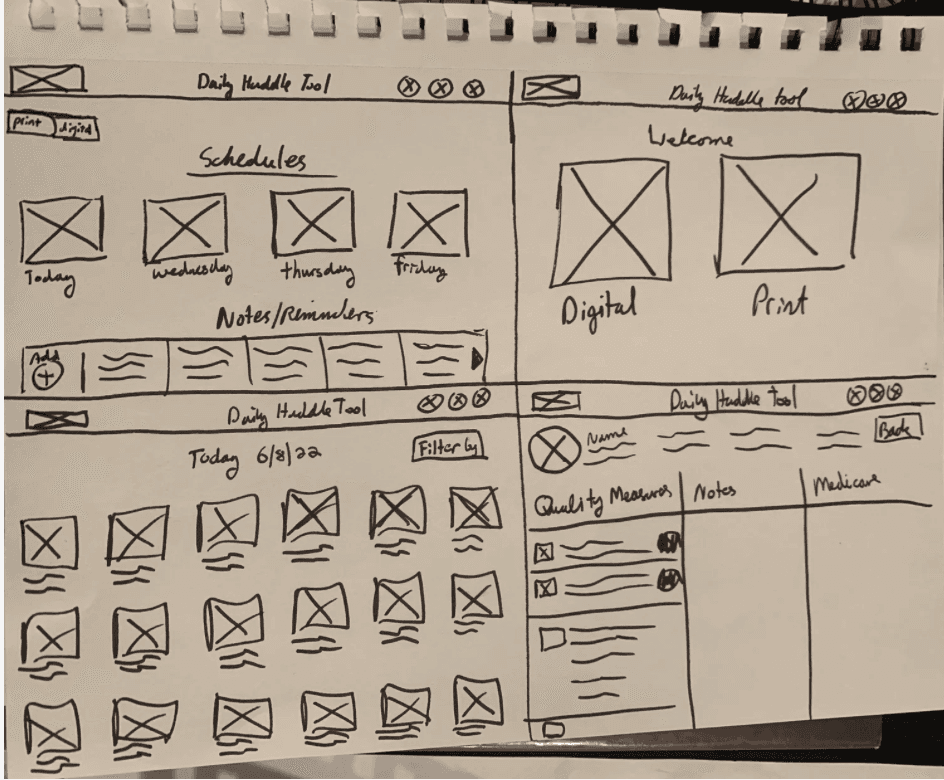
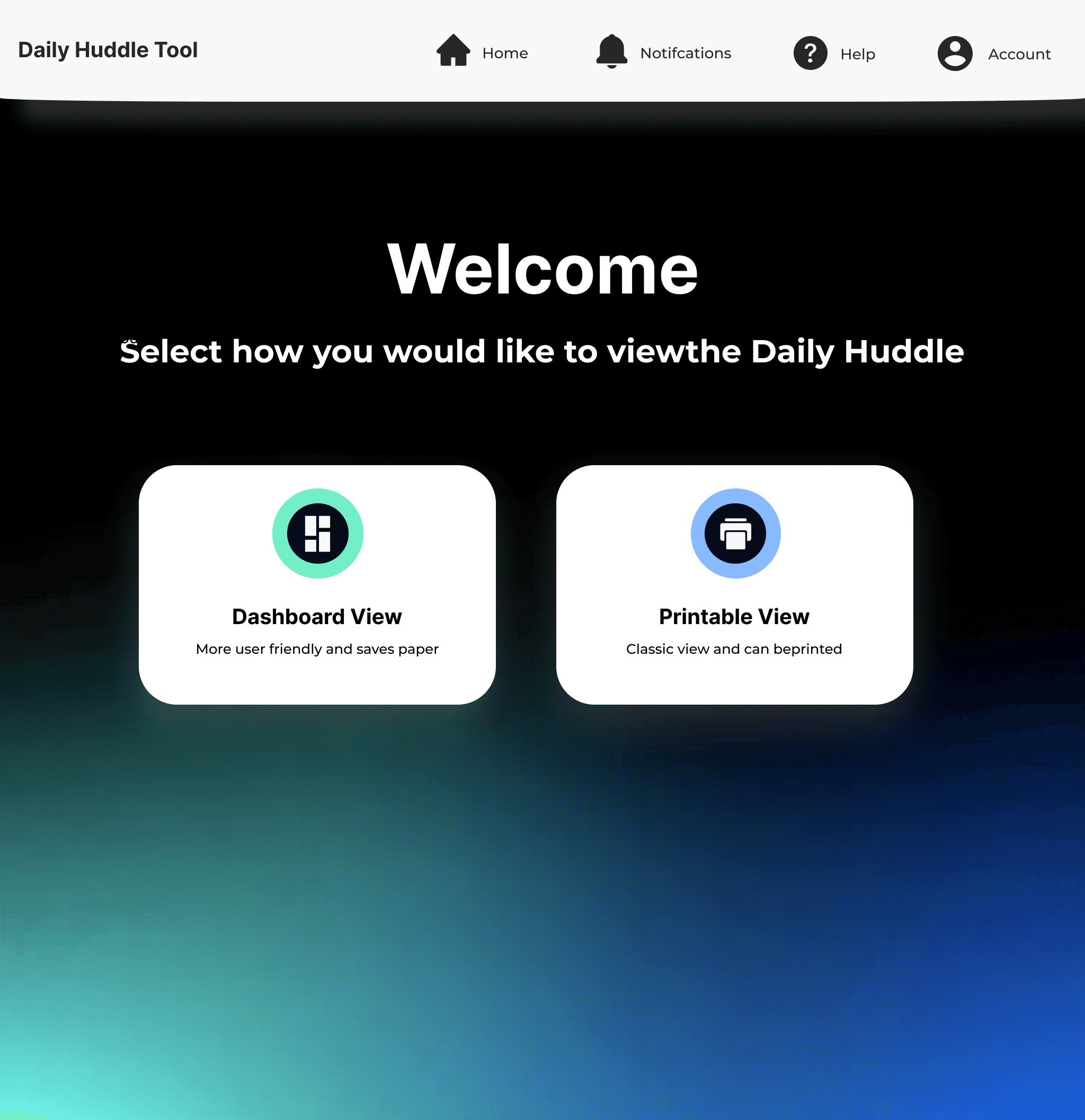
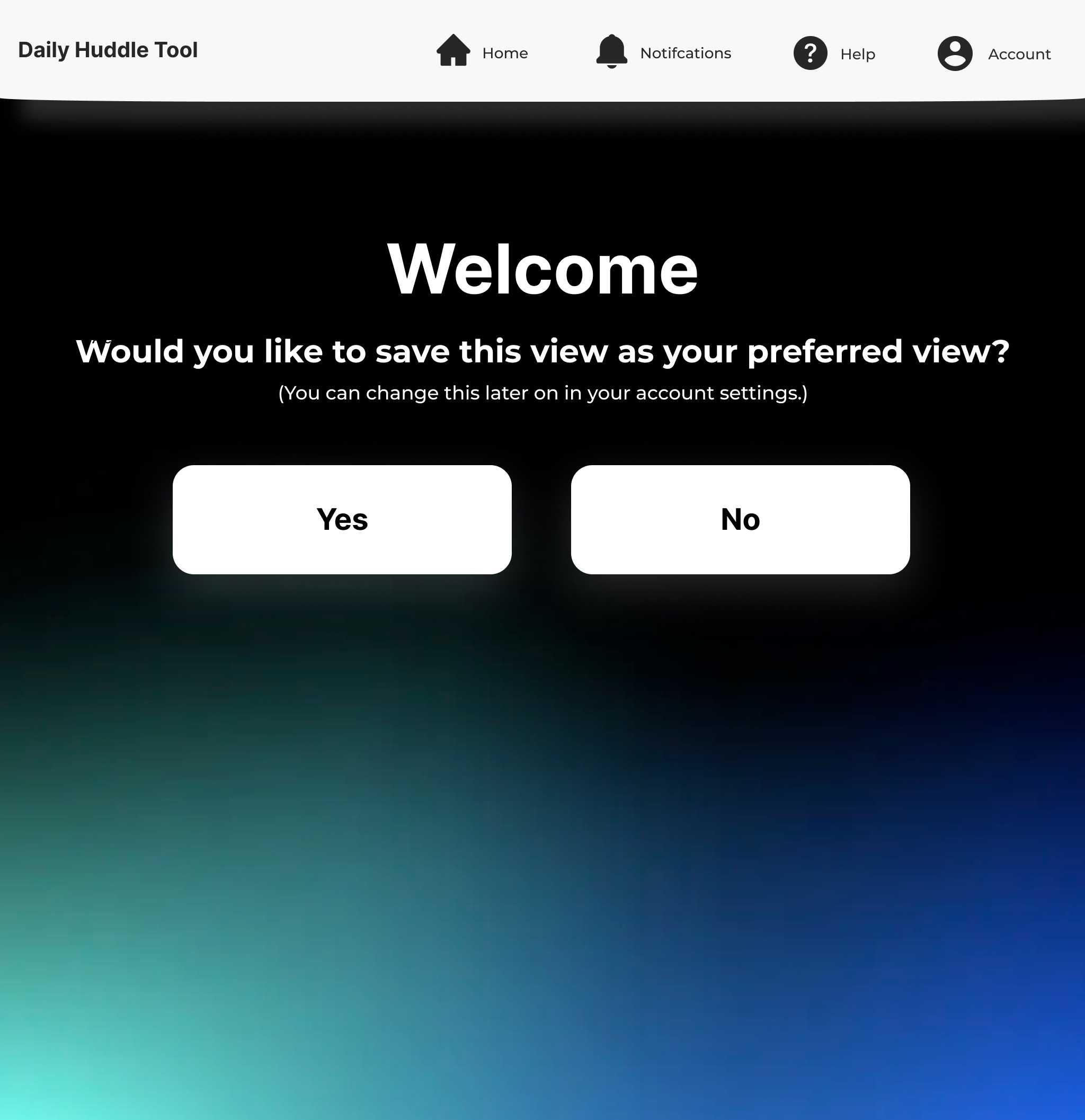
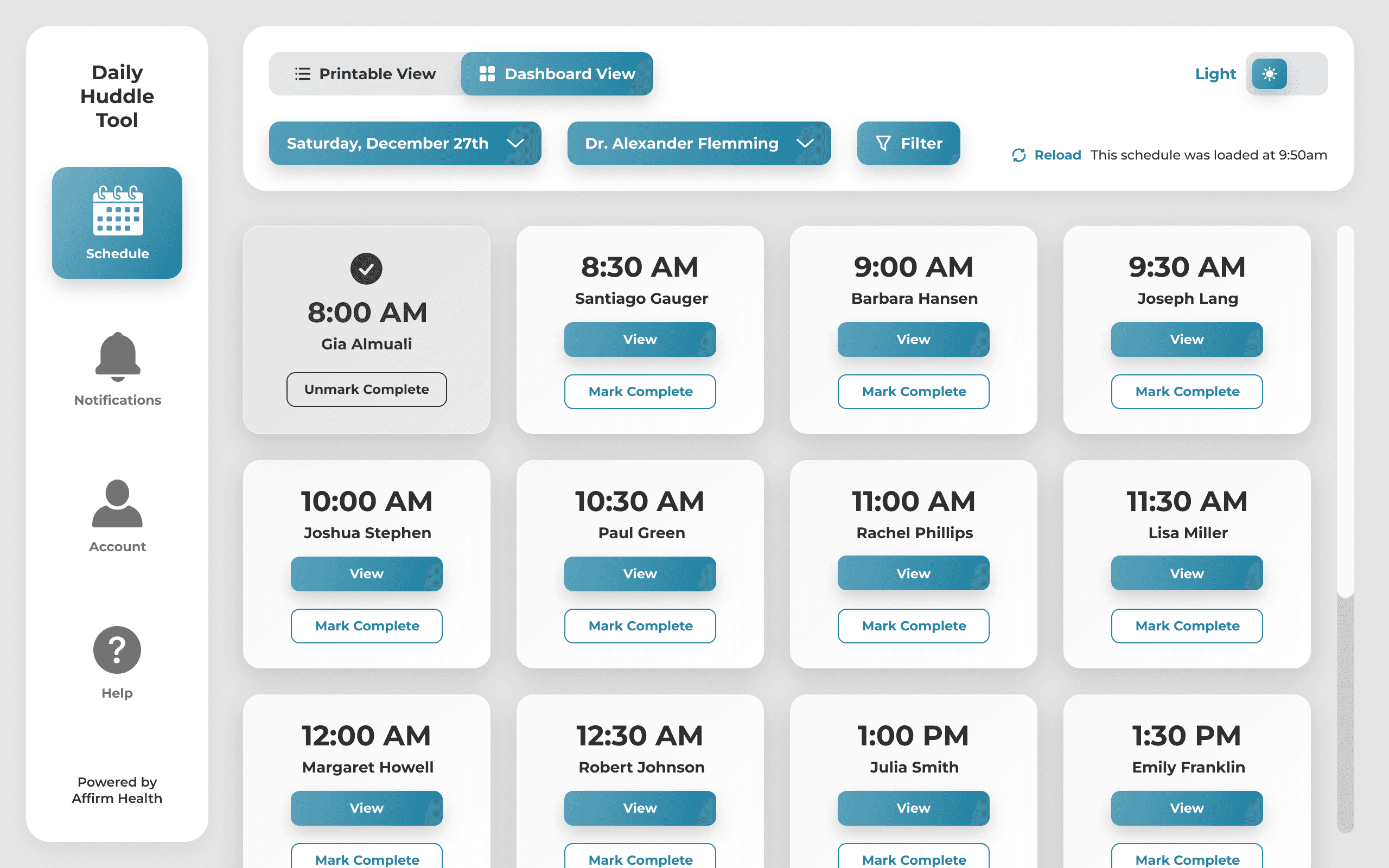
An interface that gives users the option between a traditional (printable) view or a modern digital view that provides more features that users want while making it user friendly and efficient.
An interface that gives users the option between a traditional (printable) view or a modern digital view that provides more features that users want while making it user friendly and efficient.
Heuristic Analysis
Heuristic Analysis
Heuristic Analysis
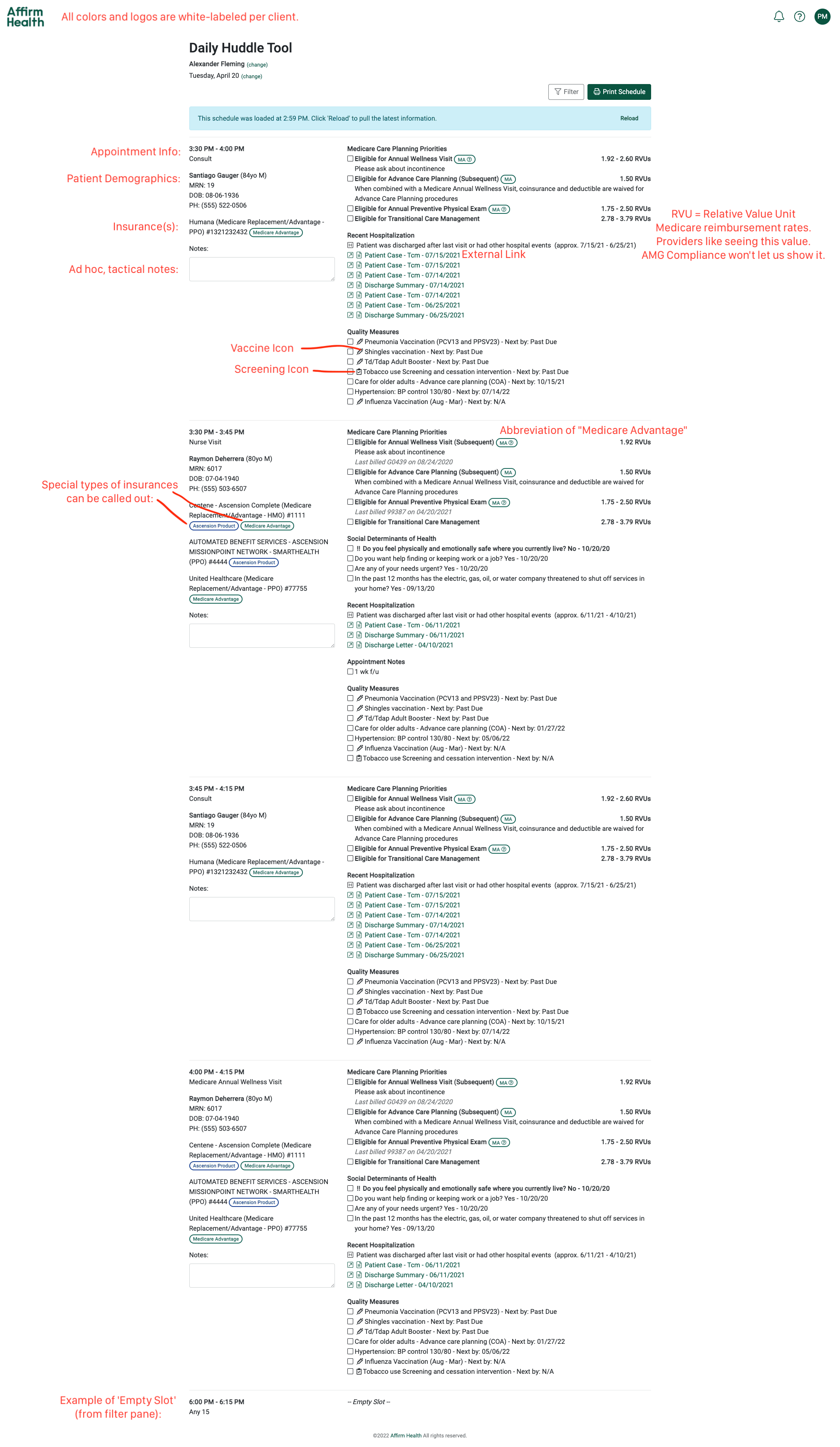
Difficult to scan / lacks use of bolding and other useful visual elements.
Top header could be more clearly defined visually.
Blue “Reload” Banner feels like it should be higher up on the page.
Unclear if the pill shaped icons are tags or buttons.
Feels out dated.
Difficult to scan / lacks use of bolding and other useful visual elements.
Top header could be more clearly defined visually.
Blue “Reload” Banner feels like it should be higher up on the page.
Unclear if the pill shaped icons are tags or buttons.
Feels out dated.
Difficult to scan / lacks use of bolding and other useful visual elements.
Top header could be more clearly defined visually.
Blue “Reload” Banner feels like it should be higher up on the page.
Unclear if the pill shaped icons are tags or buttons.
Feels out dated.
Initial Best Practices Design Update
Initial Best Practices Design Update
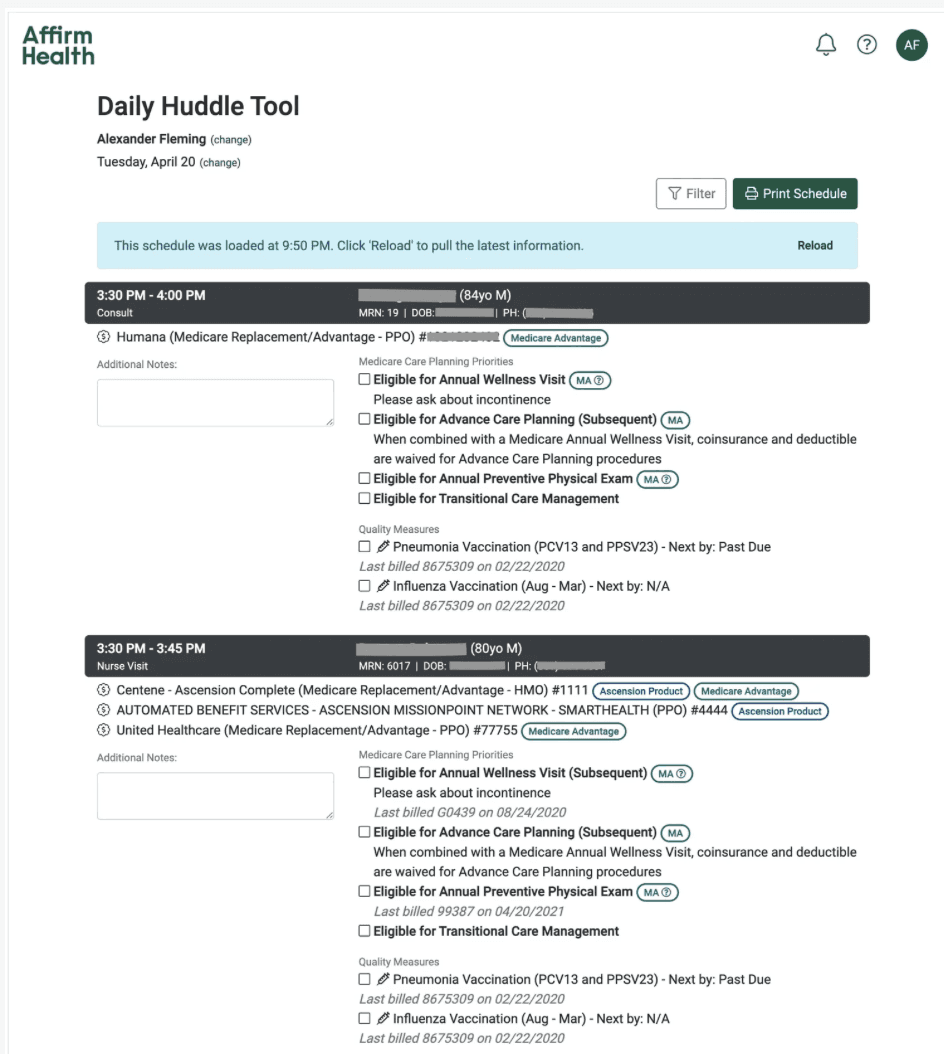
Improving visual hierarchy and readability.
Improving visual hierarchy and readability.
Contextual Interviews
Contextual Interviews
Contextual Interviews
How do you use the Daily Huddle Tool?
What do you like most about the Daily Huddle Tool?
What do you like least about the Daily Huddle Tool?
What would your dream function be?
How much time do you spend using the digital version versus the printed version?
Do you or anyone in your office use the notes section?
What would make you more likely to use the digital version?
What information on the DHT is the most important / what do you look for first?
Is there any information that seems irrelevant or that you skip over?
If you could design the DHT what would you do?
How do you use the Daily Huddle Tool?
What do you like most about the Daily Huddle Tool?
What do you like least about the Daily Huddle Tool?
What would your dream function be?
How much time do you spend using the digital version versus the printed version?
Do you or anyone in your office use the notes section?
What would make you more likely to use the digital version?
What information on the DHT is the most important / what do you look for first?
Is there any information that seems irrelevant or that you skip over?
If you could design the DHT what would you do?

Affinity Mapping
Affinity Mapping
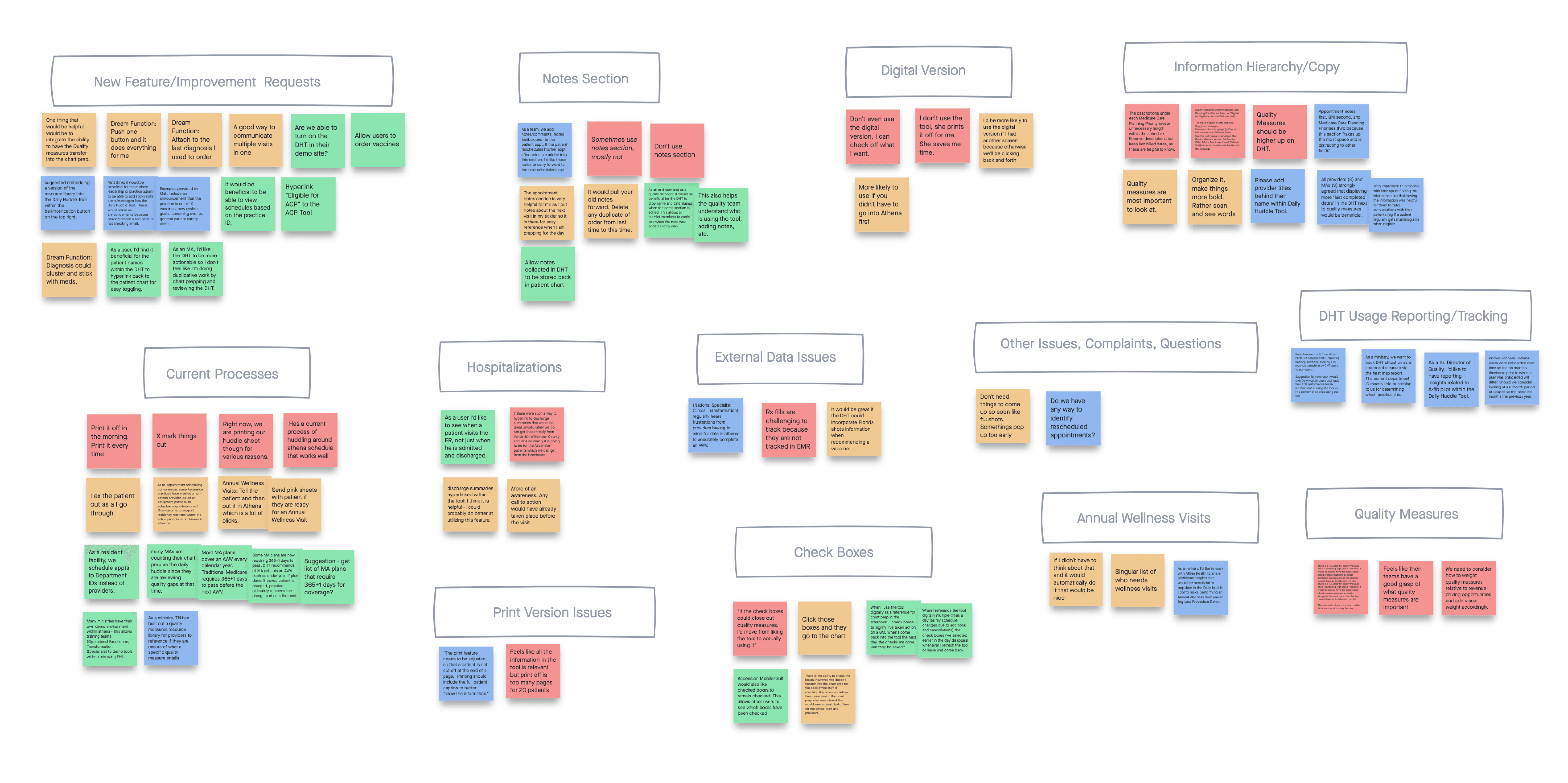
Analyzing qualitative data gathered from interviews.
Analyzing qualitative data gathered from interviews.
Personas
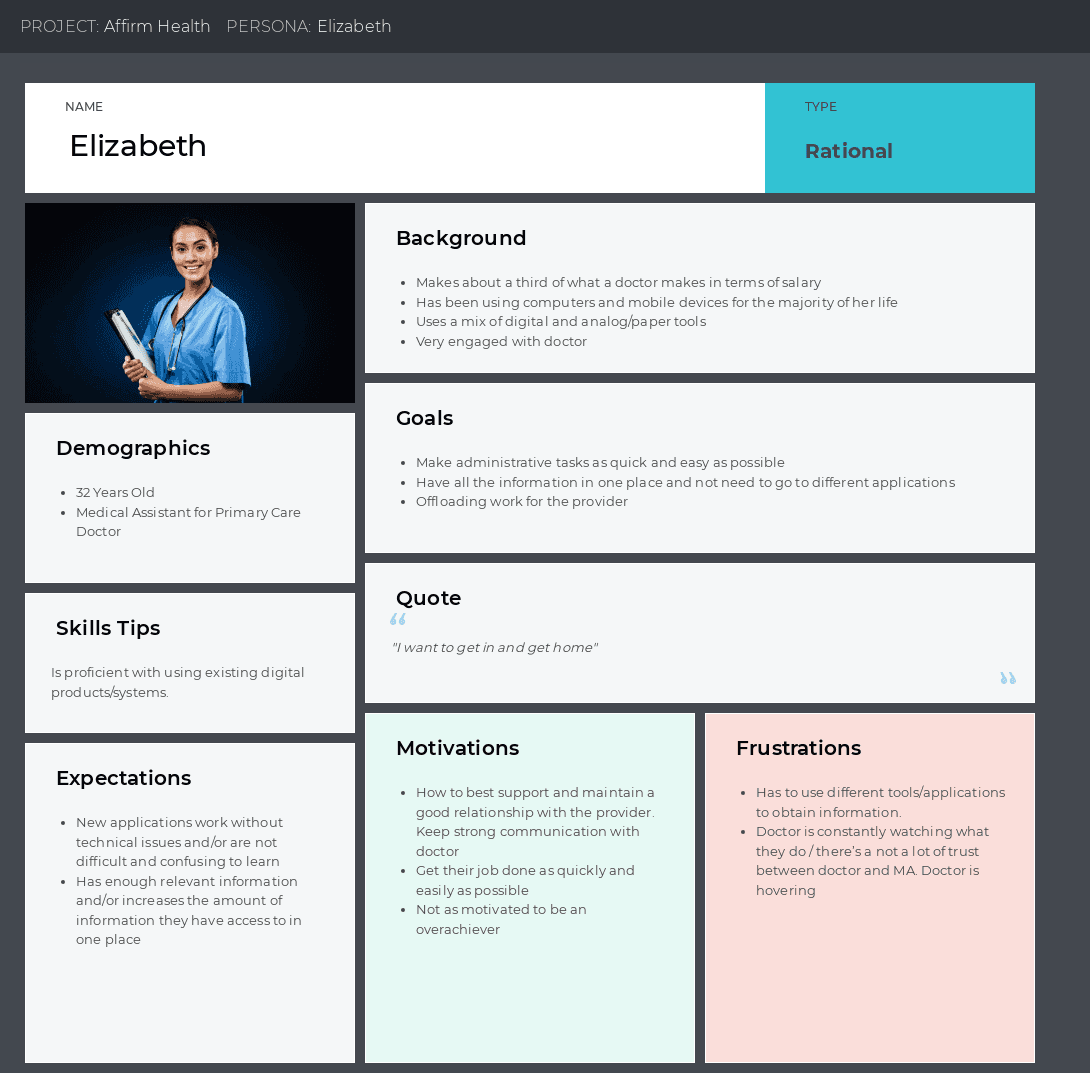
Walking in the user’s shoes.
Walking in the user’s shoes.
Task Analysis
Task Analysis
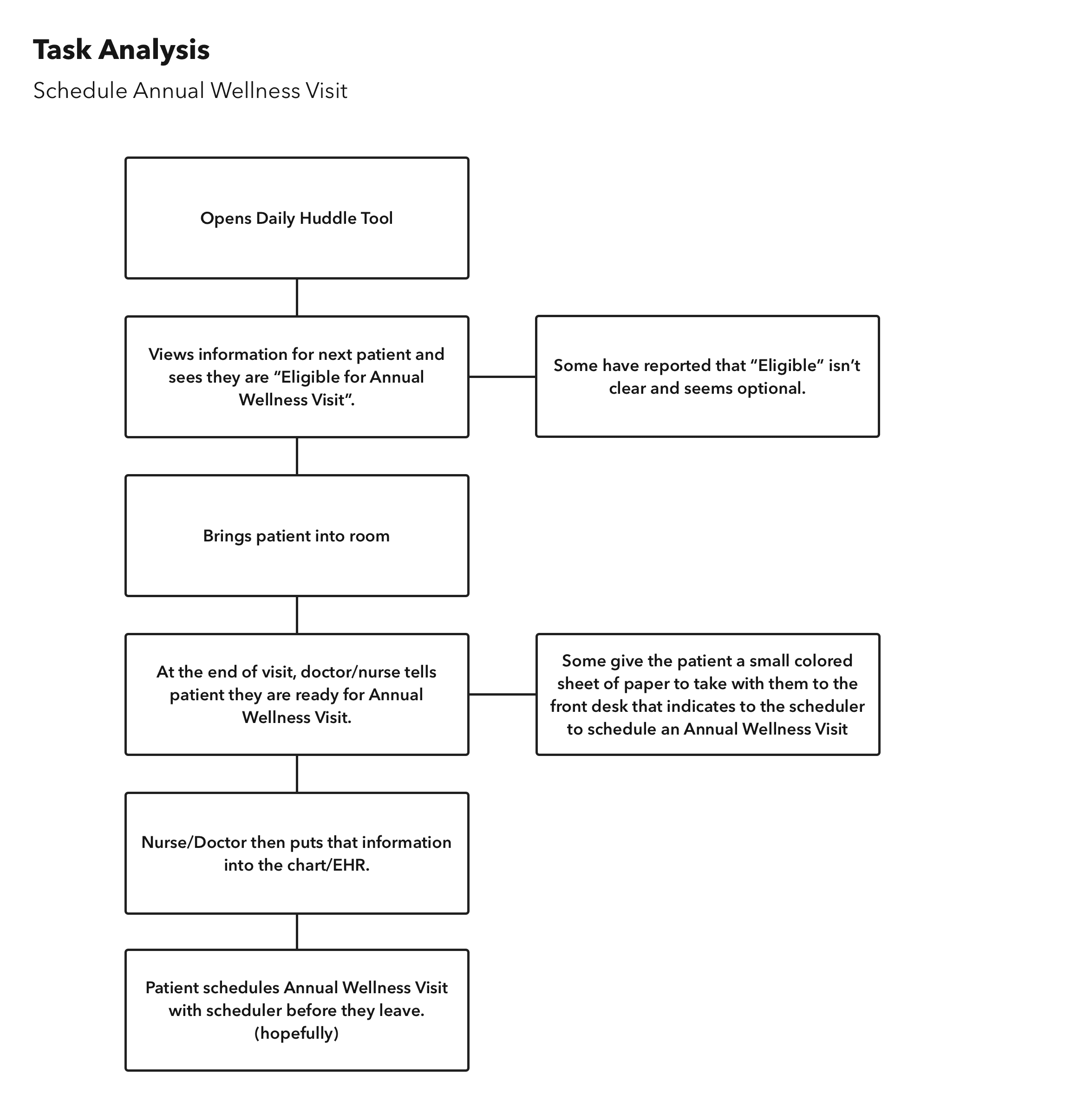
One of the most important tasks that primary care practices need to do is to make sure that patients get scheduled for annual wellness visits. This like many other things, would be made easier if there was one button a nurse or doctor could click that would automatically schedule an annual wellness visit or at the very least notify the scheduler to schedule an annual wellness visit. However, this is currently not technically feasible.
This exercise helped to break down the process that primary care practitioners go about ensuring patients get scheduled for annual wellness visits before they leave the office (if they’re ready for one). This helped us come up with ideas for how to improve process with the Daily Huddle Tool.
One of the most important tasks that primary care practices need to do is to make sure that patients get scheduled for annual wellness visits. This like many other things, would be made easier if there was one button a nurse or doctor could click that would automatically schedule an annual wellness visit or at the very least notify the scheduler to schedule an annual wellness visit. However, this is currently not technically feasible.
This exercise helped to break down the process that primary care practitioners go about ensuring patients get scheduled for annual wellness visits before they leave the office (if they’re ready for one). This helped us come up with ideas for how to improve process with the Daily Huddle Tool.
Technical Constraints and Feasibility
Technical Constraints and Feasibility
Hospitalizations data
ntegrate ability to have Quality Measures transfer into the chart prep
Diagnosis could cluster and stick with meds. Attach to the last diagnosis that was used to order.
Rx fills are challenging to track because they are not tracked in the EHR
Order vaccines / store vaccination history
Duplicative work in chart prep
Allow notes to be stored back in chart
External data issues

Ideation Sketching
Ideation Sketching
How can I satisfy different user groups at the same time? How can I create a design that is familiar to the human eye and incorporate new features?
How can I satisfy different user groups at the same time? How can I create a design that is familiar to the human eye and incorporate new features?
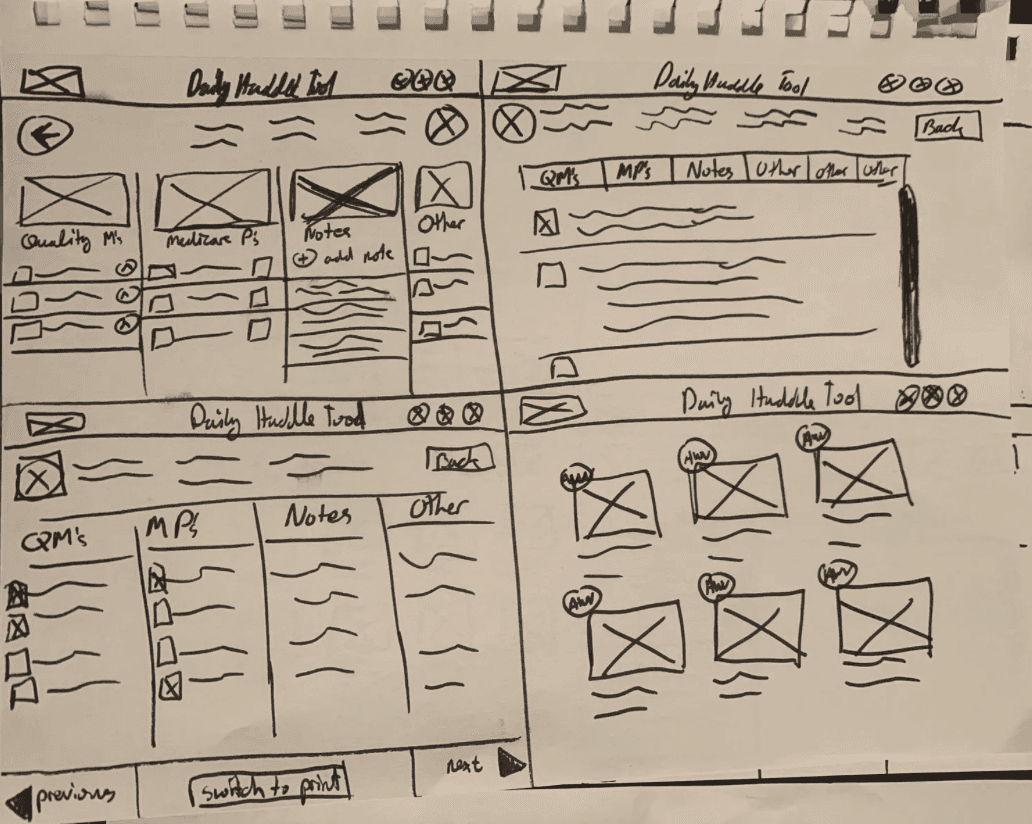
Wireframes
Wireframes
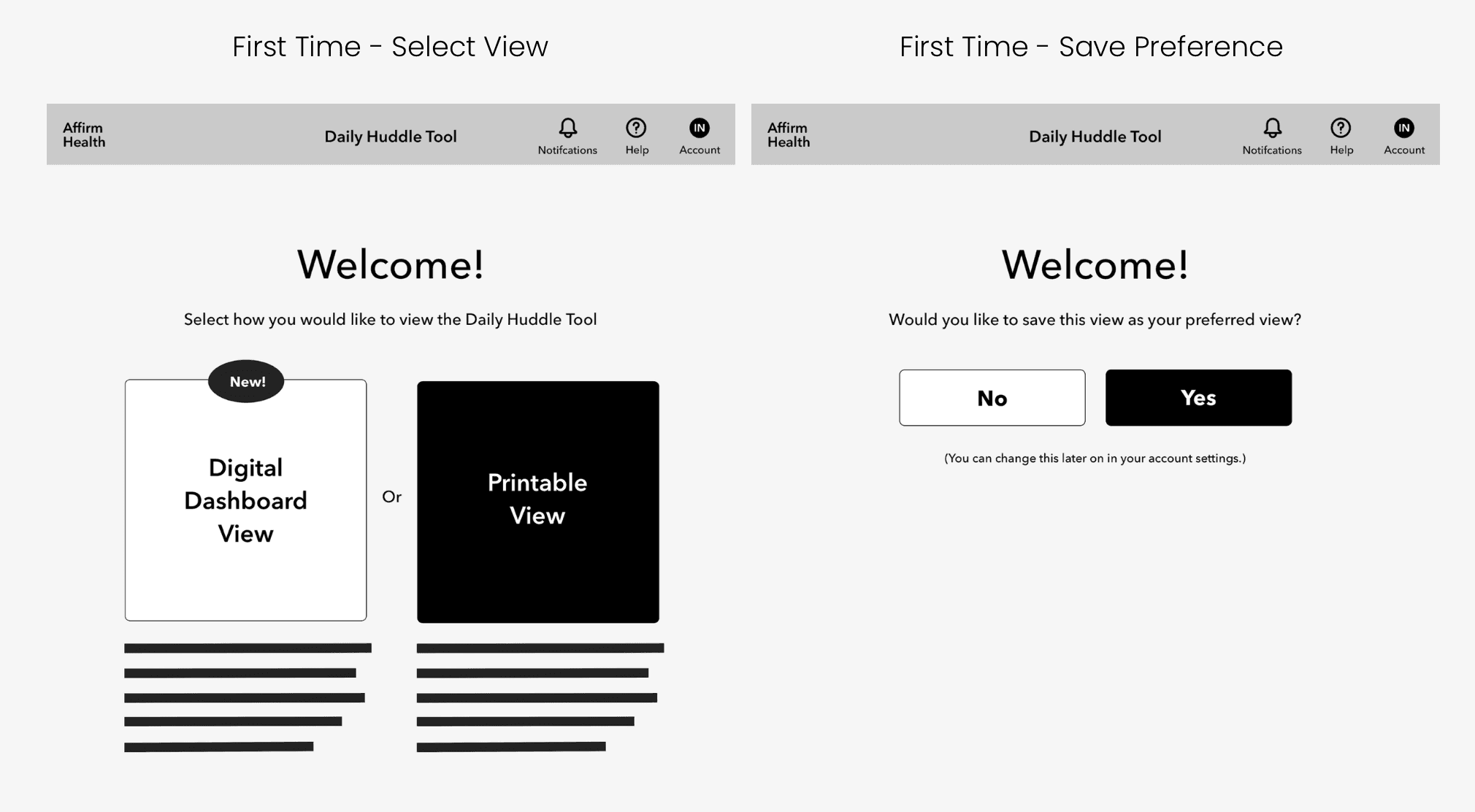
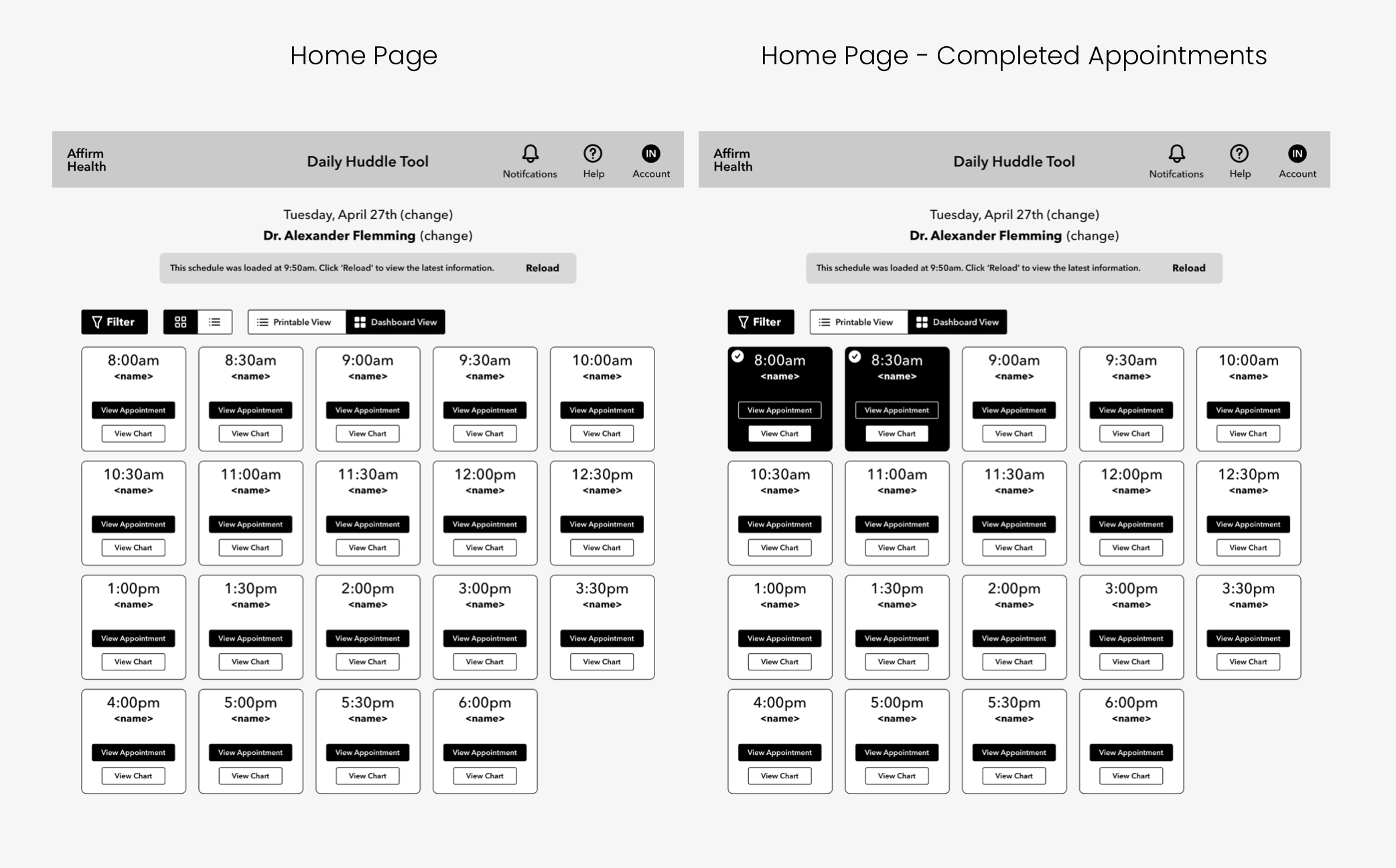
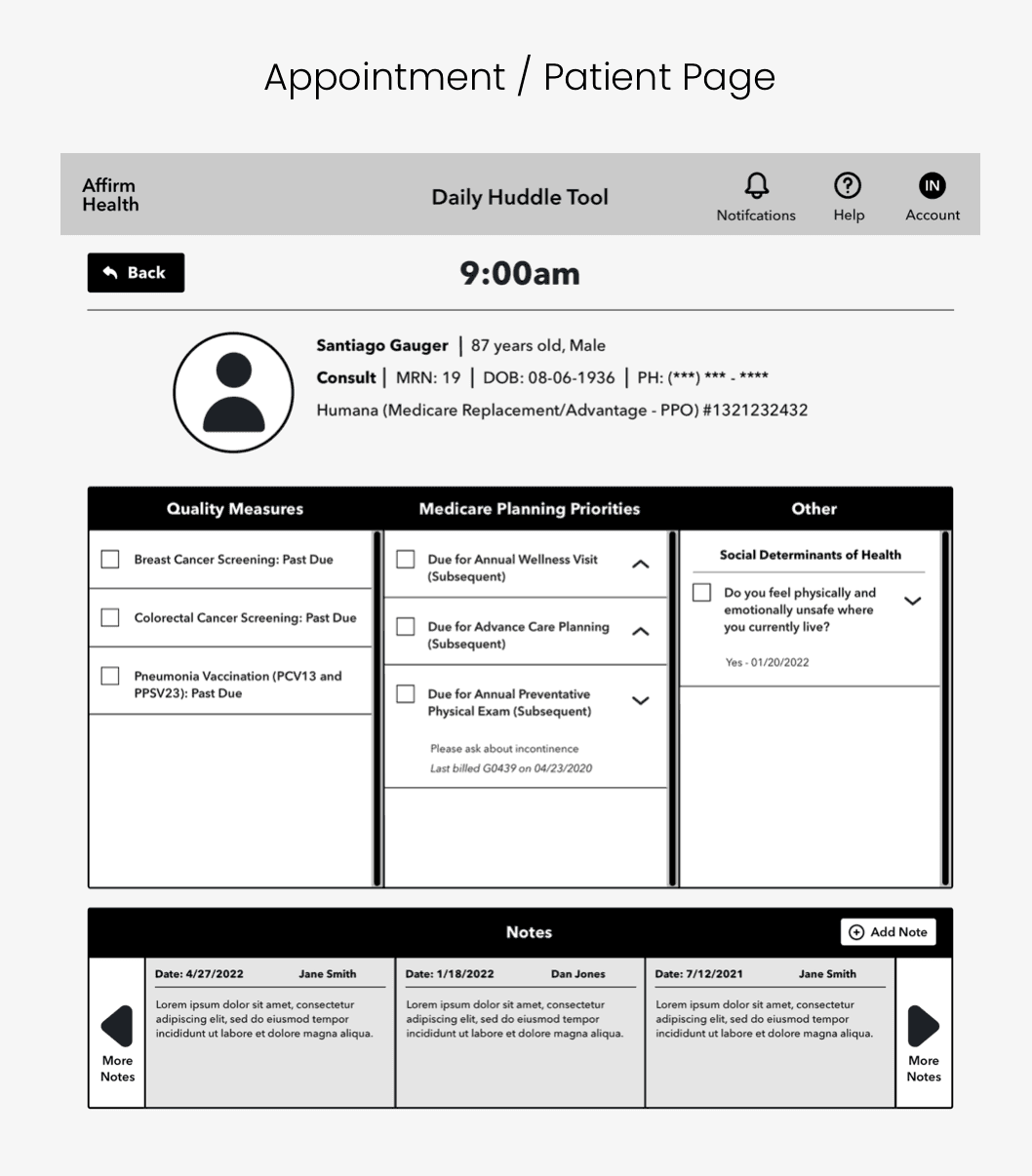
Initial High Fidelity Prototype and Visual Design Exploration
Initial High Fidelity Prototype and Visual Design Exploration
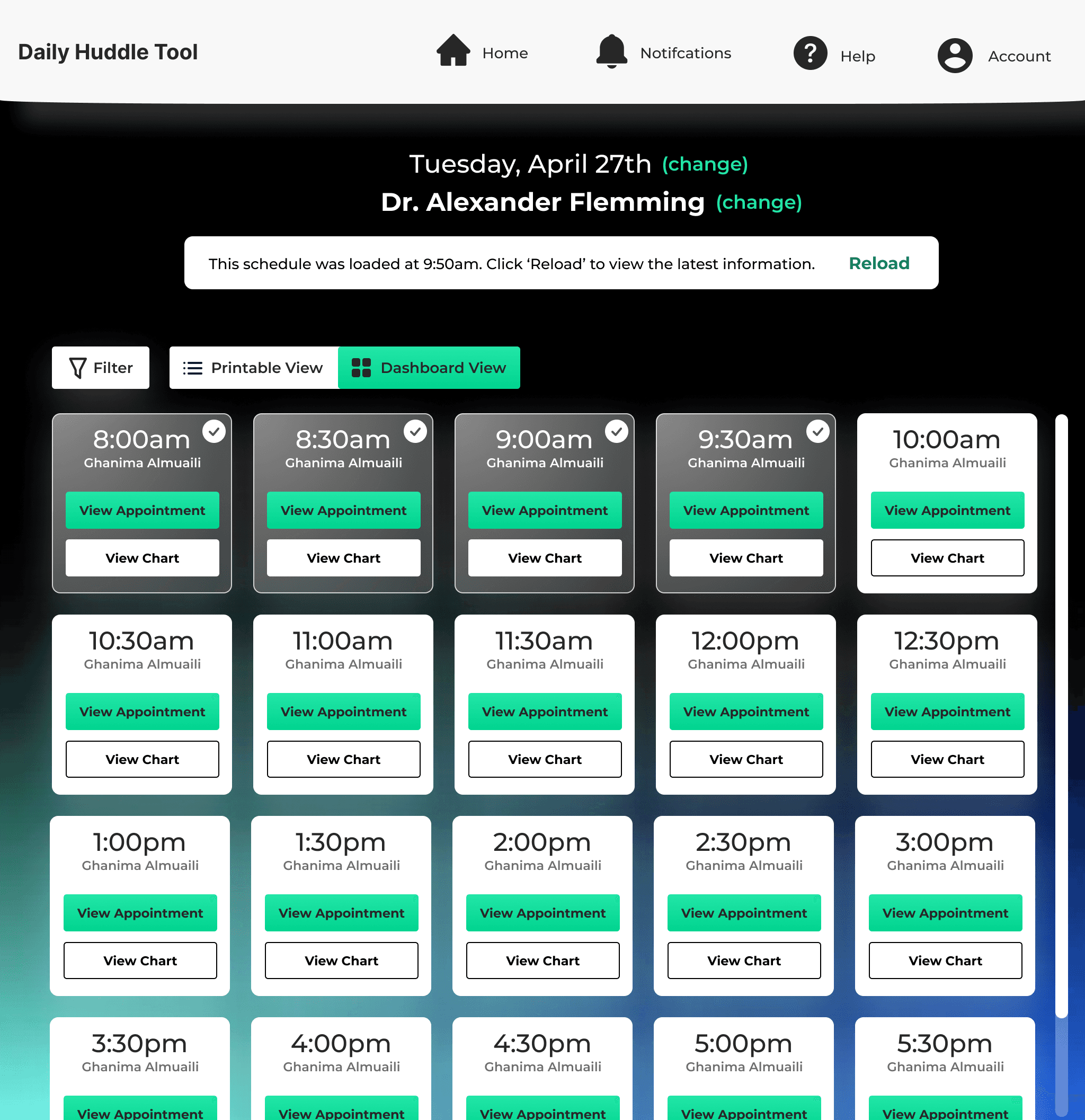
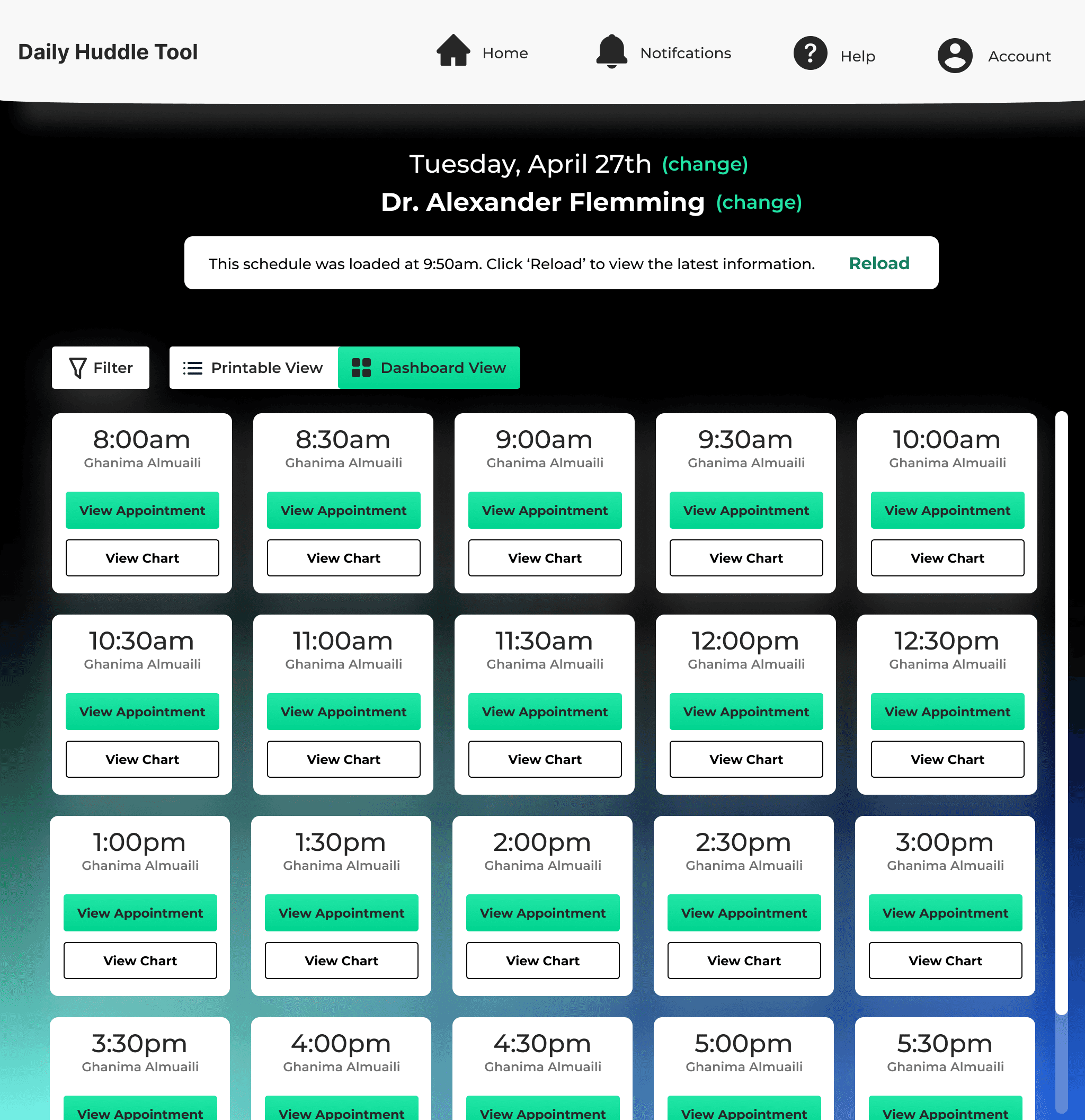
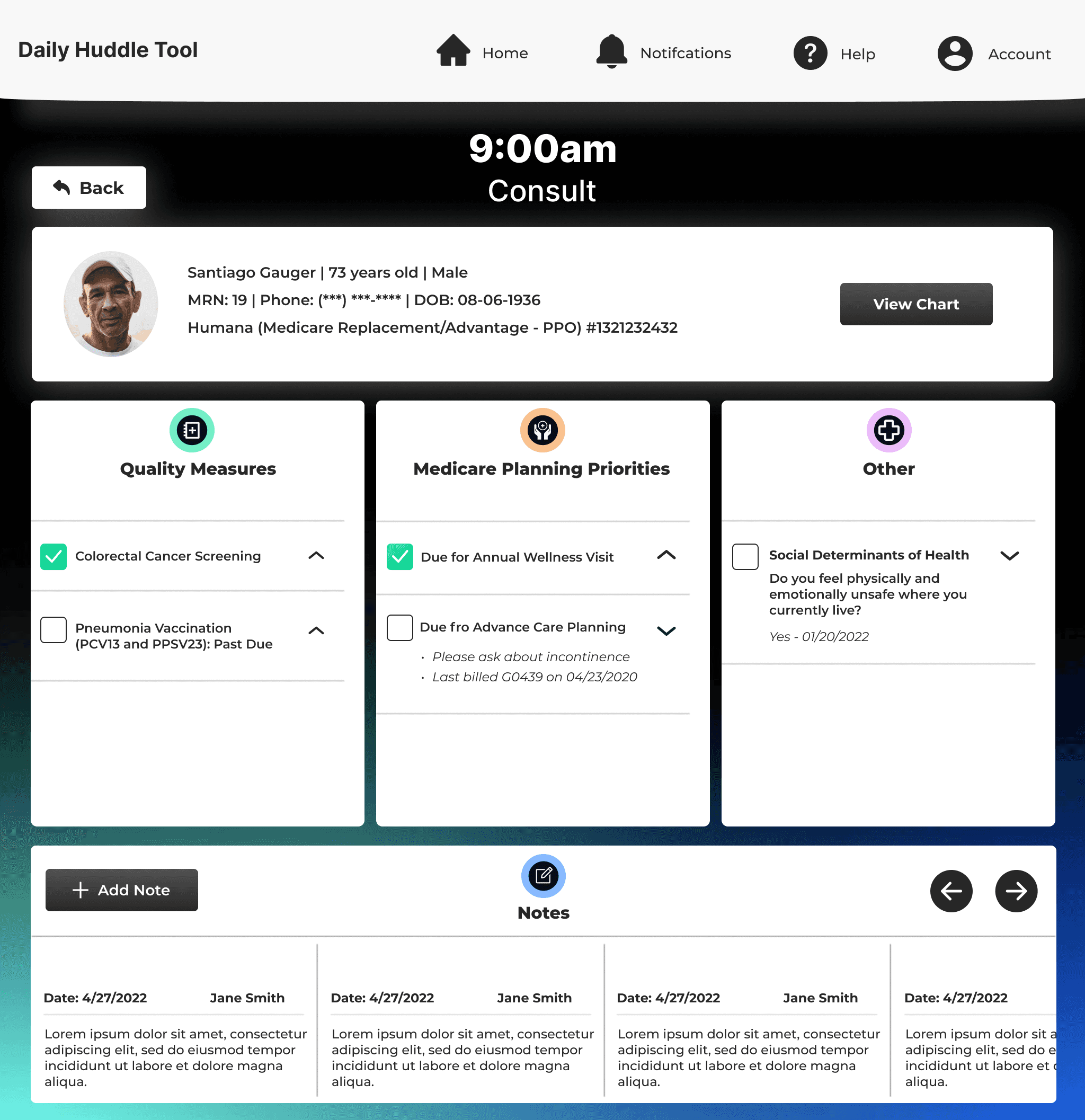
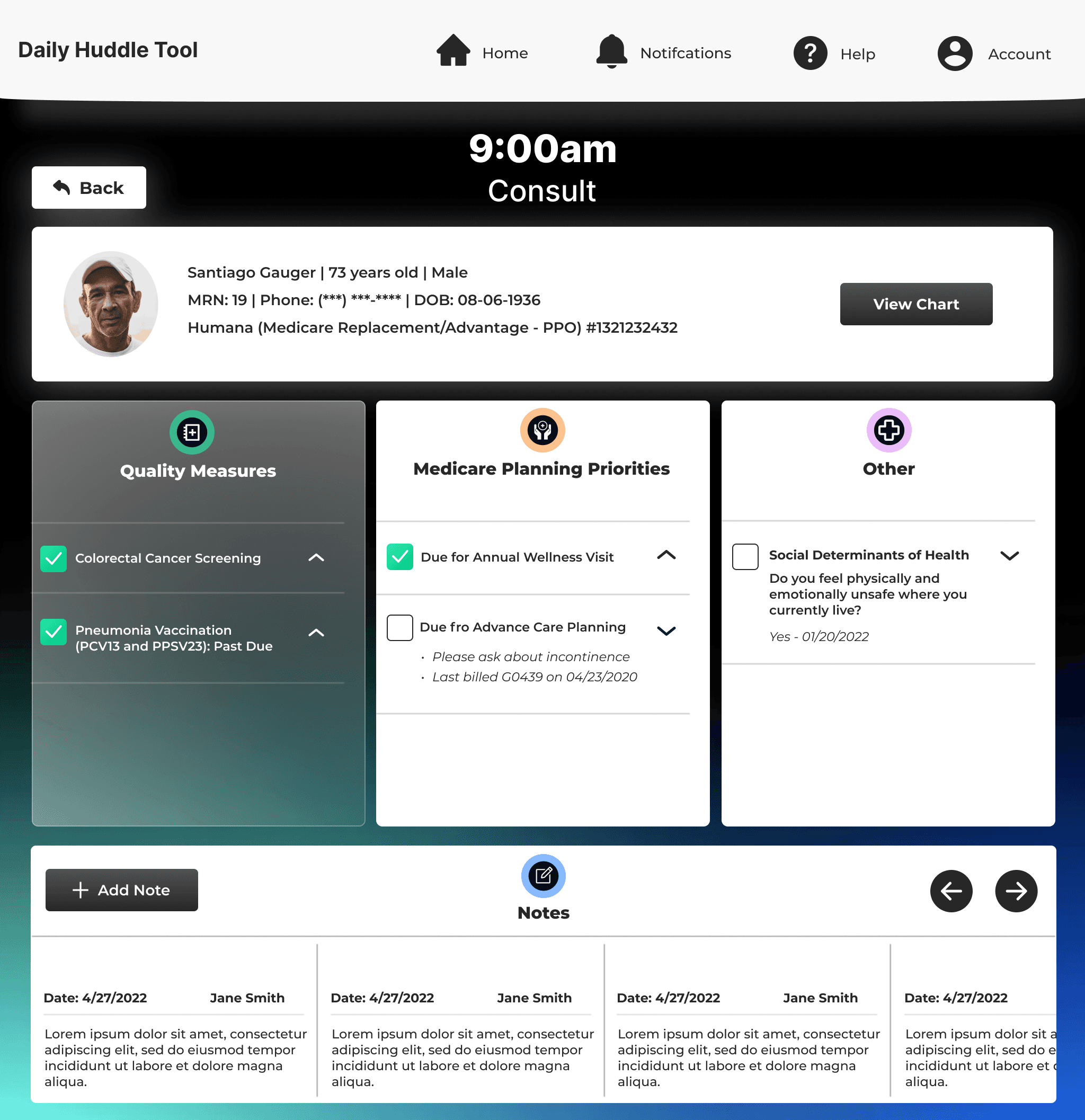
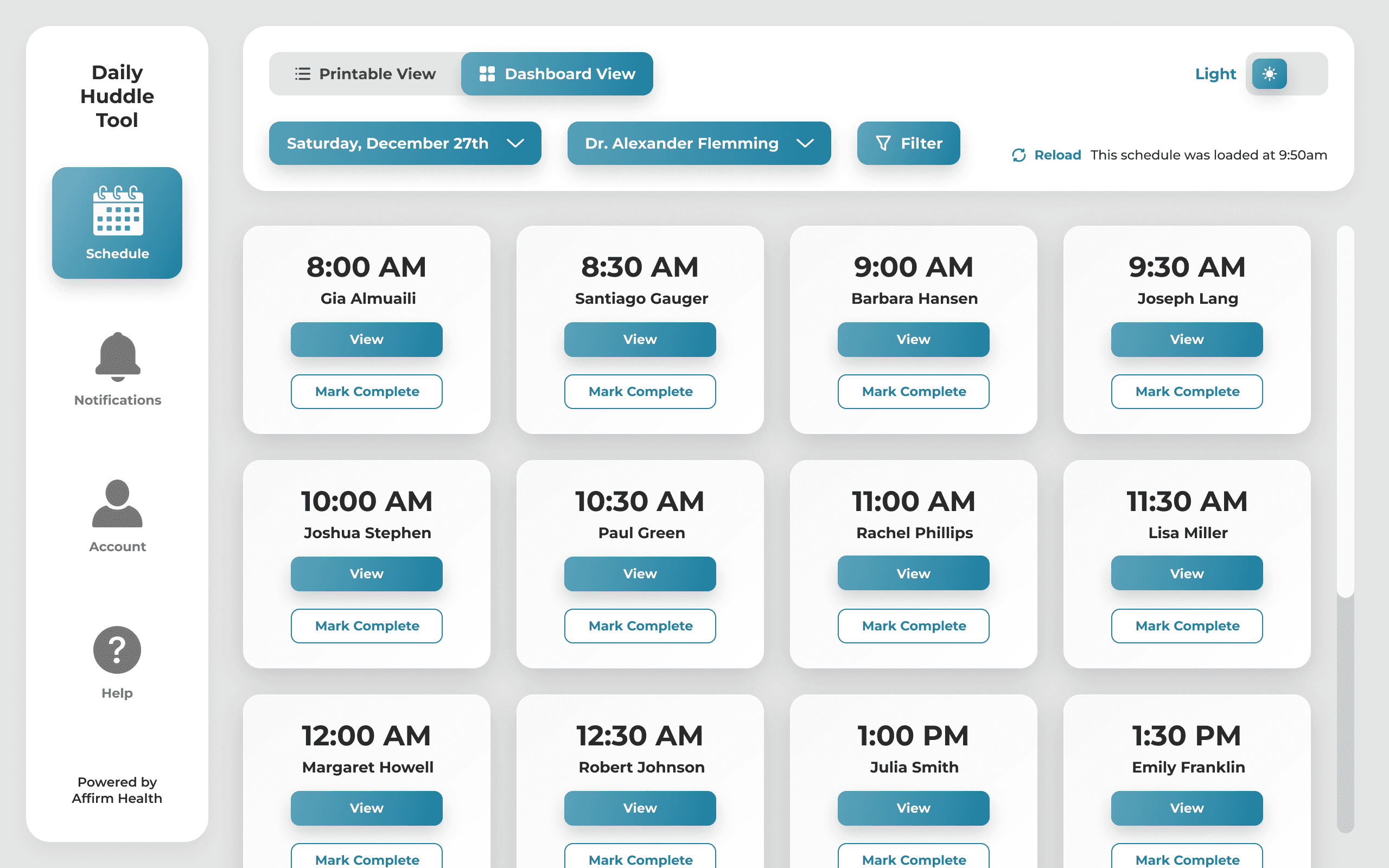
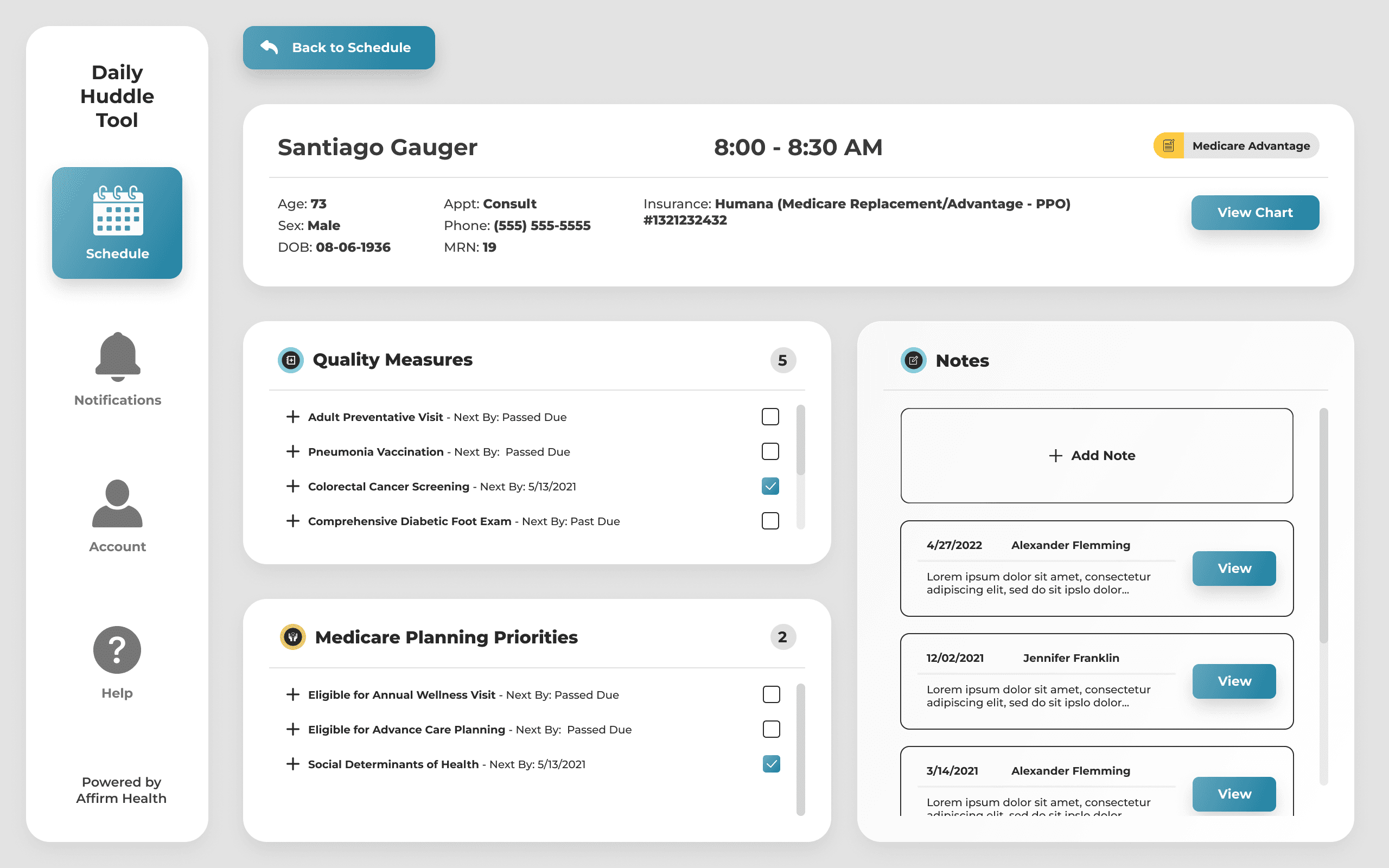
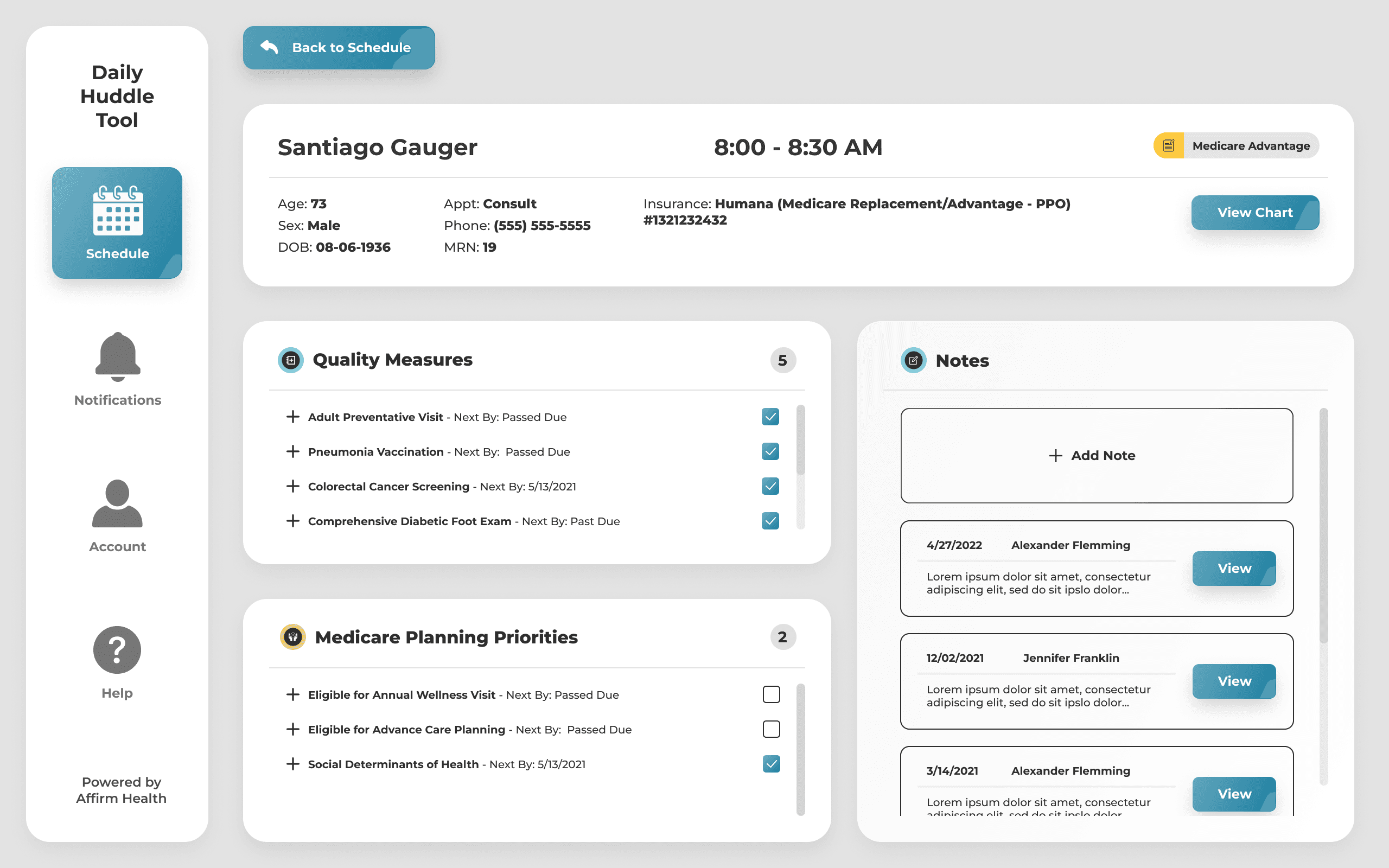
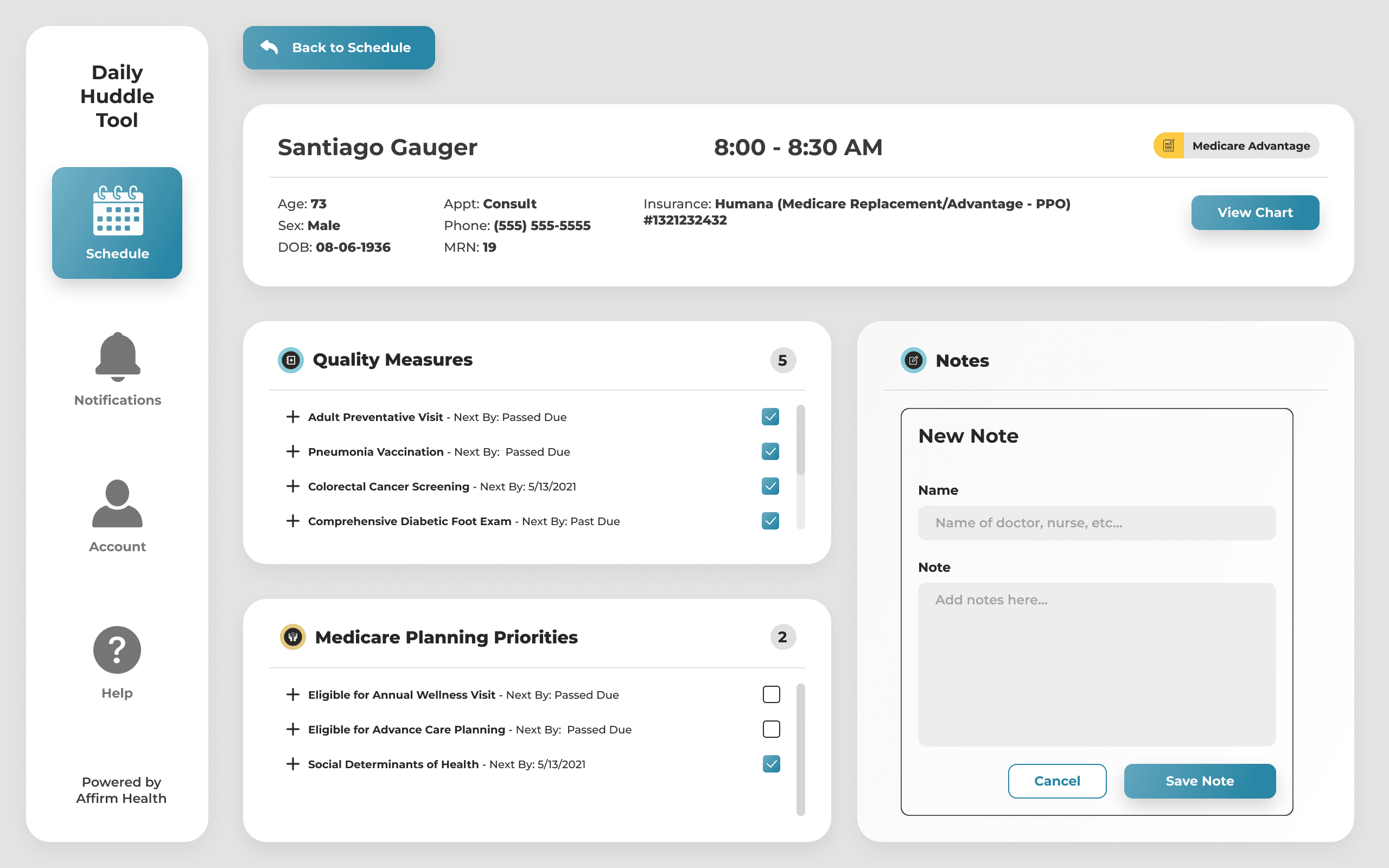
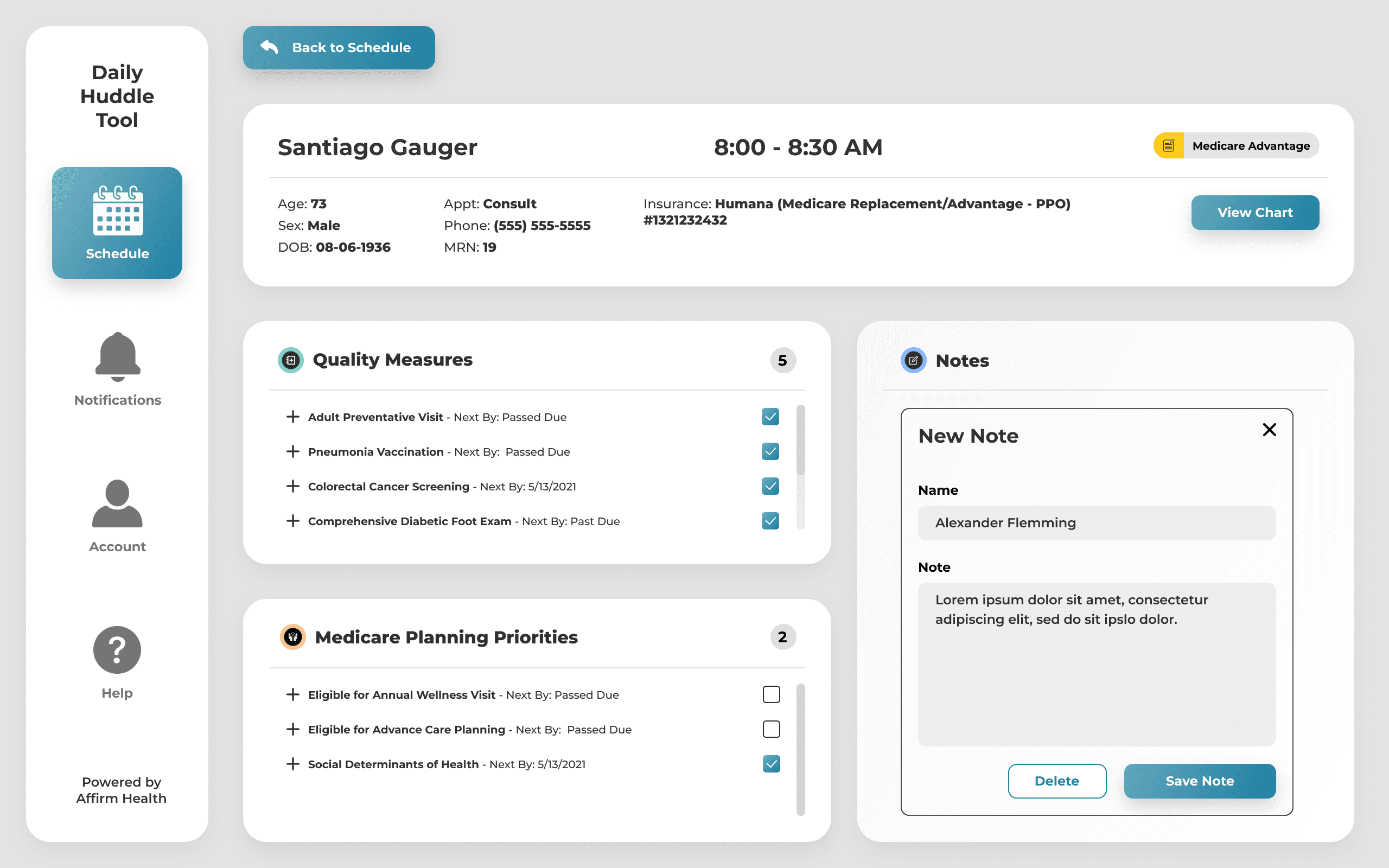
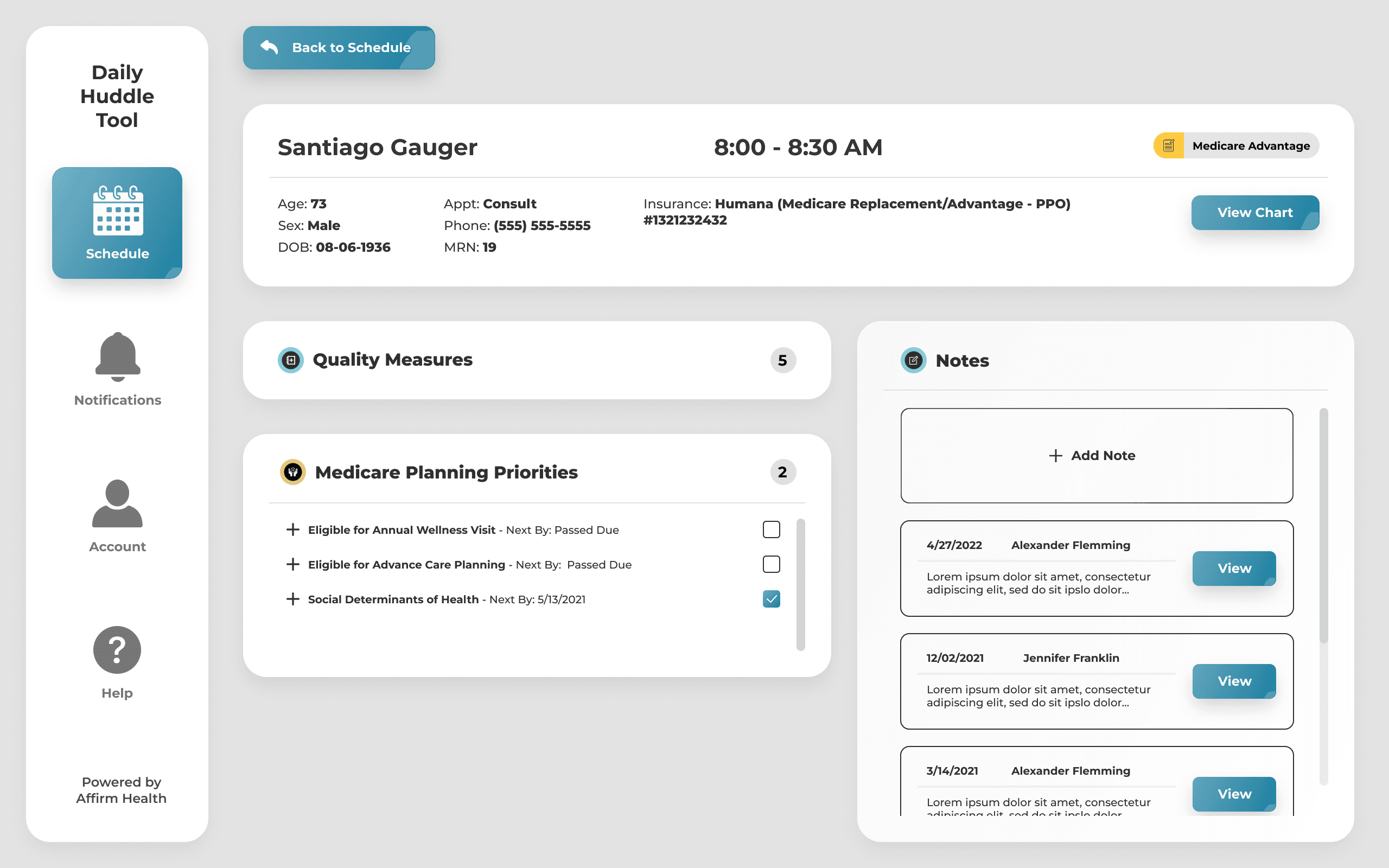
Outside of the visual design component of this final iteration, I also made some slight changes to the user experience itself based on further conversations and considerations. Most notably, I changed the “View Chart” button on each of the appointment modals on the dashboard to be “Mark Appointment Complete”. I then added the “View Chart” button to the full patient appointment view because this is where doctors/nurses would prefer to have this feature. The “Mark Appointment Complete” buttons on the dashboard would then in turn give users additional functionality to visually show which appointments had been completed.
Outside of the visual design component of this final iteration, I also made some slight changes to the user experience itself based on further conversations and considerations. Most notably, I changed the “View Chart” button on each of the appointment modals on the dashboard to be “Mark Appointment Complete”. I then added the “View Chart” button to the full patient appointment view because this is where doctors/nurses would prefer to have this feature. The “Mark Appointment Complete” buttons on the dashboard would then in turn give users additional functionality to visually show which appointments had been completed.

Final Iteration
Final Iteration
Figma Prototype
Figma Prototype
Outcome
Outcome
18.5 increase in usage (KPI) of the Daily Huddle Tool on their computers, instead of printing it off.
Significant increase in positive user feedback.
18.5 increase in usage (KPI) of the Daily Huddle Tool on their computers, instead of printing it off.
Significant increase in positive user feedback.